

What is Somatic EMDR?
When might Somatic EMDR be especially recommended over traditional EMDR?
✅ Body Memories — physical sensations (pain, tightness, trembling) without clear verbal memories.
✅ Developmental Trauma — early life trauma (neglect, attachment wounds) where the nervous system got shaped over time, not just by one event.
✅ Chronic Health Conditions — like fibromyalgia, migraines, digestive issues linked to unresolved trauma.
✅ Easily Overwhelmed — intense emotions or body reactions that feel too big, too fast.
✅ No Clear Story — knowing you feel anxious, fearful, or "off," but not having clear memories to process.
✅ Need for Slow Pace — needing gentle, body-based tracking rather than diving deep into heavy memories right away.
Somatic EMDR, is a new therapeutic approach that combines two powerful therapy modalities:
EMDR (Eye Movement Desensitization and Reprocessing), which helps people reprocess traumatic memories and resolve traumatization by stimulating bilateral brain activity (like side-to-side eye movements, tapping, or sounds).
Somatic Therapy, which focuses on the body's felt sense — meaning the sensations, tension, movements, and energy in the body — to help release trauma that's "stored" physically, not just cognitively.
When you combine them, Somatic EMDR helps a client not just think about a traumatic memory but feel and reprocess the body responses to it.
So how it looks in practice?
Before diving into heavy memories, a therapist might help the client build somatic resources (like grounding, noticing safety cues, or orienting in the present moment).
During reprocessing, instead of focusing solely on the memory, the client might track what's happening inside their body — for example, a tightness in the chest, a sense of heat, or a trembling.
The therapist may use bilateral stimulation while gently guiding the client to stay present with body sensations, allowing trauma energy stuck in the body to move and resolve.
Why it's important?
Trauma often bypasses words. The body holds reactions even when the mind "forgets."
Somatic EMDR brings healing to both mind and body.
How is somatic emdr different from traditional emdr?
Traditional EMDR Somatic EMDR
Main Focus: Primarily on cognitive memories: Focuses on both the cognitive memories and the
thoughts, images, beliefs, emotions linked body’s sensations and movements during to the trauma. processing.
Processing Style: Targets memories by Actively tracks what the body feels and does
activating them and using bilateral (tightness, shaking, numbness)
stimulation (like eye movements) to alongside memory processing.
process distress.
Client Awareness: Mostly asked about Client is also encouraged to notice
the memory, thoughts, emotions, and name bodily experiences:
and belief shifts. tension, breath changes, somatic impulses.
Goal: Reduce the distress and negative Release trapped trauma energy
beliefs linked to the trauma memory. in the body and restore nervous system
regulation, alongside cognitive healing.
Techniques Added: Follows 8 phases, May weave in grounding, titration, pendulation,
usually staying pretty structured. somatic resourcing, and more flexible tracking
of body experiences.
In Summary,
Traditional EMDR works a lot from the "neck up" (memory, emotions, cognition).
Somatic EMDR works from the "neck down, too" (nervous system, body sensations, instinctual survival responses).
Both can be very healing and effective— but with Somatic EMDR the process can be better paced, more body-centered, and more manageable to clients. It can be extra helpful for people whose trauma shows up physically (like chronic pain, dissociation, or deep anxiety without a clear "story"). Some clients feel safer with Somatic EMDR because it emphasizes going at the body’s pace and helps prevent overwhelm.
When might Somatic EMDR be especially recommended over traditional EMDR?
✅ Body Memories — physical sensations (pain, tightness, trembling) without clear verbal memories.
✅ Developmental Trauma — early life trauma (neglect, attachment wounds) where the nervous system got shaped over time, not just by one event.
✅ Chronic Health Conditions — like fibromyalgia, migraines, digestive issues linked to unresolved trauma.
✅ Easily Overwhelmed — intense emotions or body reactions that feel too big, too fast.
✅ No Clear Story — knowing you feel anxious, fearful, or "off," but not having clear memories to process.
✅ Need for Slow Pace — needing gentle, body-based tracking rather than diving deep into heavy memories right away.

What Is Trauma? Understanding Trauma and Effective Trauma-Informed Care
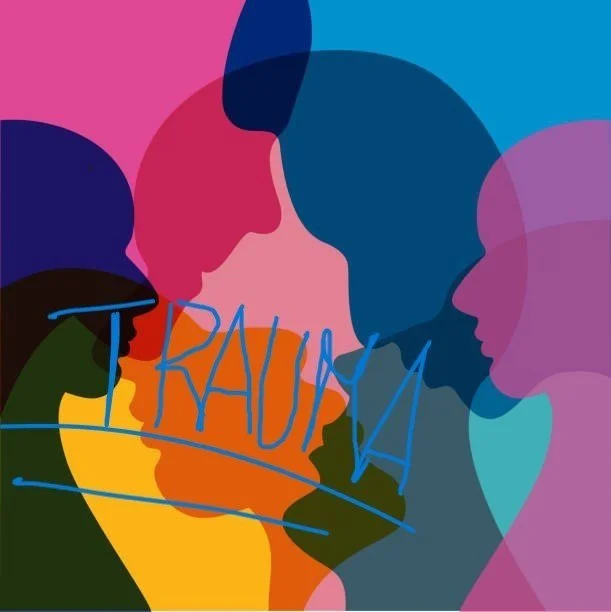
Trauma is a word we hear often, but many people are left wondering what it really means—and why its effects can feel so lasting.
At its core, trauma is not just about what happened. It’s about how the nervous system responds to an experience that feels overwhelming, threatening, or too much to process at the time.
When something exceeds our capacity to cope, the nervous system shifts into survival mode. This can affect how we think, feel, relate to others, and experience our bodies—sometimes long after the original event has passed.
What Is Trauma?
Trauma is any experience that overwhelms the nervous system and disrupts our sense of safety.
This includes not only major events, but also ongoing or relational experiences such as chronic stress, attachment wounds, or emotional neglect.
The nervous system is made up of the central nervous system (brain and spinal cord) and the peripheral nervous system (the network of nerves throughout the body). When we experience something overwhelming, this system is impacted as it tries to protect us and ensure survival.
We all have a natural ability to process and integrate life experiences. But when something is too intense or happens too quickly, that natural process can become interrupted.
Instead of being fully processed, the experience can remain “held” in the body and nervous system.
Over time, this can show up as:
Anxiety or persistent worry
Depression or emotional numbness
Guilt or shame
Difficulty in relationships
Feeling stuck, overwhelmed, or disconnected
Challenges with trust, safety, or self-worth
When these patterns persist, they may be understood as post-traumatic stress (PTSD) or complex PTSD (C-PTSD).
What Is Effective Trauma-Informed Care?
Healing from trauma is not just about understanding what happened—it’s about helping the nervous system feel safe enough to process what was too much before.
Effective trauma-informed care takes a holistic approach, recognizing that trauma impacts:
Thoughts
Emotions
The body and nervous system
Traditional talk therapy can be helpful, but often focuses primarily on thoughts and feelings. Trauma, however, also lives in the body—through patterns of tension, activation, and shutdown.
This is why approaches that include the body and nervous system are essential.
A Nervous System–Informed Approach to Healing
When therapy includes the body, we begin to work with the deeper layers of how trauma is stored and experienced.
Approaches such as Somatic EMDR (Eye Movement Desensitization and Reprocessing) integrate EMDR with body-based and nervous system–informed awareness, allowing for a more complete and grounded healing process.
Rather than reliving the experience, the focus is on helping the nervous system stay within what is often called the “window of tolerance.”
This is the space where we are able to stay present, feel what arises, and process experiences without becoming flooded or shutting down.
From this place, healing becomes more integrated, more sustainable, and more aligned with the body’s natural capacity to recover.
Somatic EMDR for Trauma
Somatic EMDR helps the brain and body reprocess traumatic experiences so they no longer feel as overwhelming or disruptive.
By integrating EMDR with somatic and nervous system–informed approaches, this work supports:
Greater emotional regulation
Increased sense of safety in the body
Reduced overwhelm during processing
More flexibility and resilience in daily life
This approach can be especially helpful for complex trauma, attachment wounds, and experiences that feel deeply rooted or difficult to access through words alone.
EMDR Consultation for Therapists Working with Trauma
Working with trauma—especially complex trauma and dissociation—can bring moments where therapists feel uncertain, stuck, or in need of additional support.
EMDR consultation for therapists offers a space to deepen clinical understanding, build confidence, and receive guidance while working toward EMDRIA certification hours.
My consultation approach is rooted in Somatic EMDR, integrating EMDR with nervous system–informed and body-based perspectives. This supports therapists in working within the window of tolerance and navigating more complex presentations with clarity and care.
If you’re an EMDR therapist seeking clinical consultation hours, you can learn more about it here:
EMDR Consultation for Therapists
A Message of Hope
Healing from trauma is possible.
Not by forcing ourselves to “move on,” but by creating the conditions where the body and nervous system can finally feel safe enough to process what was once overwhelming.
Your responses make sense.
Your nervous system has been trying to protect you.
And with the right support, healing can unfold in a way that feels grounded, compassionate, and sustainable.
This article is informed by trauma-informed, somatic, and EMDR-based approaches, including Somatic EMDR and nervous system–informed models of healing and integration.
Ready to Take the Next Step?
If you’re looking for support, I offer trauma-informed therapy for adults in San Diego and online across California, integrating Somatic EMDR, somatic approaches, and mindfulness-based practices.
If you’re a therapist seeking EMDR consultation or working toward certification, I also offer individual and group consultation.